

 Mount Everest may be the reason many people start planning a Himalayan adventure, but it is not the only reason the journey is worth taking.
The trail itself has a story. It moves through forests, high valleys, small villages, old monasteries, and changing mountain scenery. Every day brings something different before the path finally reaches the famous base camp.
The Everest Base Camp Trek With Helicopter Return lets you enjoy that gradual journey on foot and then finish the adventure with a flight over the mountains.
A Trail That Keeps Changing
One of the best things about trekking in the Everest region is that the scenery does not stay the same for long.
A morning may begin beside trees and a rushing river. Later, the path can lead into a wide valley with giant peaks filling the horizon.
Nature Changes With Elevation
As you gain altitude, the landscape slowly loses its softer look.
Forests become thinner. Hills become more rocky. The air feels colder, and the mountains seem much closer.
You can actually see the environment changing as your journey continues.
The Trail Has Its Own Rhythm
A mountain trek does not feel like an ordinary vacation.
There are no traffic lights, crowded highways, or busy city streets. Much of your day is shaped by walking, resting, eating, and watching the landscape.
That slower rhythm can take some time to get used to.
Walking Becomes the Main Activity
After a few days, you may stop thinking about how many hours are left.
Instead, you start noticing smaller things: a mountain bird, a prayer flag moving in the wind, a distant waterfall, or a village around the next bend.
That is when the trek starts feeling less like a task and more like an experience.
Bridges Connect More Than Two Sides
Suspension bridges are a familiar part of the route.
They cross rivers and deep gaps, often with colorful flags attached to their sides.
Some bridges are short. Others stretch across wide valleys.
Crossing Takes a Little Courage
The first bridge may make you nervous if you are not used to heights.
Keep your attention on your steps and follow the trail. There is no need to hurry.
Once you reach the other side, the view back across the valley can make the crossing feel worthwhile.
Mountain Villages Offer a Break From the Trail
The settlements along the route give the journey a human side.
You may see stone walls, small shops, lodges, prayer areas, and homes built to suit the mountain environment.
These places are not just stops on a trekking map.
Watch Everyday Life Around You
A local shopkeeper serving tea, a porter moving supplies, or a family working around a home can tell you something about life in the region.
You do not need a formal tour to learn.
Sometimes simply observing respectfully can help you understand how different mountain life is from life in a city.
The View Is Not Always About Everest
It is easy to spend the entire trek looking for Everest.
That can cause you to miss other remarkable peaks.
Ama Dablam has a distinctive shape. Lhotse rises dramatically near Everest. Nuptse creates another huge wall of rock and snow.
Let the Whole Mountain Range Impress You
The Himalayas are much bigger than one famous summit.
Some of your favorite photographs may have nothing to do with Everest itself.
A village surrounded by mountains or a narrow trail above a deep valley can be just as memorable.
Weather Adds an Element of Surprise
The mountains do not promise the same conditions every day.
A clear sky can become cloudy. Wind can pick up. A warm afternoon can turn cold as the sun disappears.
That unpredictability is part of high-altitude travel.
Pack for Change, Not Perfection
Instead of dressing for one type of weather, use layers.
You can remove a layer while walking and put it back on when the temperature drops.
A waterproof outer layer is also useful because mountain weather can change quickly.
Simple preparation makes changing conditions much easier to handle.
High Altitude Changes How You Walk
At higher elevations, your usual walking habits may not work as well.
You may feel tired after a short climb. Your breathing can become heavier, and even simple steps can require more effort.
This is normal to some extent, but it should never be ignored when symptoms become serious.
Patience Is a Trekking Skill
You cannot force your body to adjust to altitude.
Walk slowly. Take proper rest. Drink enough water and follow your guide’s advice.
The strongest trekker is not always the fastest one. In the high mountains, good judgment matters more than speed.
The Final Days Feel Different
As you approach Everest Base Camp, the surroundings become more rugged.
There are fewer trees and more exposed rock. The mountains appear larger, while the air feels colder.
You can sense that the journey is reaching its main point.
The Landscape Becomes Almost Otherworldly
The higher valley has a raw beauty.
There is less greenery and more stone, ice, snow, and enormous mountain walls.
The simplicity of the landscape makes every feature stand out.
Reaching Base Camp Is a Personal Achievement
Everest Base Camp is famous, but reaching it means something different to every traveler.
For one person, it may be a long-held dream. For another, it may be a personal challenge or a chance to experience a place far outside their normal life.
Remember the Days Behind You
Before taking the final photograph, think about the route.
Remember the bridges, climbs, villages, early mornings, tired legs, and changing weather.
The destination feels more meaningful when you remember everything it took to reach it.
Then the Journey Takes to the Air
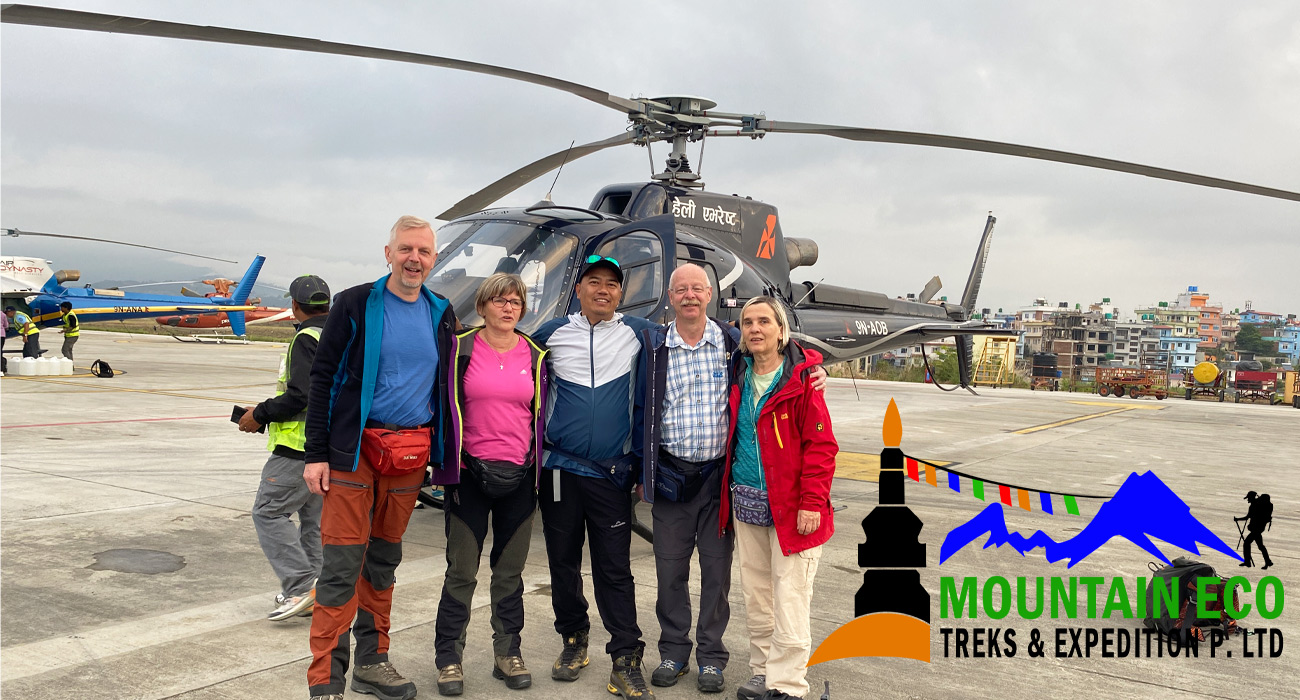
The Everest Base Camp Trek With Helicopter Return changes the experience after the walking section ends.
Instead of following the same trail downhill for several more days, you can return by helicopter when weather and operating conditions are suitable.
The change from walking to flying can be dramatic.
Familiar Places Look Completely New
A trail that seemed long while walking can look tiny from the air.
Valleys that took hours to cross appear connected. Villages sit like small dots between giant mountain slopes.
You begin to see the entire region rather than just the small section directly in front of you.
The Flight Is More Than a Quick Exit
The helicopter return also gives you one final opportunity to appreciate the landscape.
While trekking, your view is often controlled by the shape of the valley. From above, the wider geography becomes visible.
You can see how rivers, villages, trails, and mountains fit together.
End the Trip With a Wider View
There is something fitting about finishing a mountain journey by looking back at it from above.
You have spent days moving through the landscape step by step.
Now, in a much shorter period, you can see how far that journey actually took you.
Smart Travelers Leave Room for Weather
A helicopter flight in the Himalayas depends on safe conditions.
Clouds, wind, visibility, and other factors can affect operations.
That means flexibility should be part of your planning.
Build a Buffer Into Your Schedule
Do not assume every part of the journey will run exactly on time.
Leaving extra time before an important international flight can make a major difference if weather causes a delay.
A relaxed schedule is far better than spending the end of your trip worrying about connections.
What Makes This Experience Different?
The Everest Base Camp Trek With Helicopter Return combines two very different ways of exploring the mountains.
Walking gives you time to notice the details. You experience the trail slowly, meet people along the route, and feel the changes in altitude and landscape.
Flying gives you distance and perspective.
Neither experience replaces the other.
When the Trail Becomes the Memory
The most valuable part of the Everest Base Camp Trek With Helicopter Return may not be a single viewpoint or photograph.
It is the collection of moments that happen between the major destinations.
The changing landscape, quiet paths, mountain villages, cold mornings, suspension bridges, and long walking days gradually build a story of their own. Reaching Base Camp becomes the high point of that story, while the helicopter flight gives you one last chance to see the world you crossed.
For travelers who want to experience Everest as a journey rather than simply a destination, this combination offers a memorable way to walk into the mountains and leave them with a completely different view.
Frequently Asked Questions
What makes the Everest trail interesting beyond Base Camp?
The changing landscape, mountain villages, local culture, rivers, bridges, monasteries, and views of several major Himalayan peaks all add to the experience.
Does the landscape change much during the trek?
Yes. Lower sections can have forests and greener hills, while higher areas become colder, rockier, and more exposed.
Why is pacing important at high altitude?
Your body receives less oxygen as elevation increases. A slower pace gives you more time to adjust and can help reduce unnecessary strain.
Can the helicopter return be delayed?
Yes. Weather and flight conditions can affect helicopter operations, so travelers should keep some flexibility in their schedule.
What makes the helicopter return special?
It gives you a completely different view of the route. After walking through the valleys, you can see their full size and shape from above.
